Morning Stretches: A Simple Routine That Actually Sticks
By:Author:Blood Diet Editorial
Updated on:October 18, 2026

- Does Five Minutes of Stretching Actually Do Anything
- Stretching Versus a Few Extra Minutes in Bed
- Why a Short Routine Beats an Ambitious One
- Who This Routine Fits and Where to Adjust It
- Fitting the Habit Around a Full Morning
- No, Stretching Won't Flatten Your Stomach or Melt Fat
- Making Blood Diet Part of a Calmer Morning
- Starting Tomorrow Without Overcomplicating It
A few minutes of gentle movement after waking loosens stiff joints and gets blood flowing before the day gets busy. It won't change your body shape or burn fat from any one spot, but it does make the first hour feel less creaky.
The mechanism is simple: muscles that have been still for hours respond to slow, controlled movement by relaxing and lengthening a little, which is why the stiffness eases off so quickly.
This guide covers whether the habit does anything measurable, how it stacks up against other options, who it suits, and how to fold it into a week that already feels full.
Does Five Minutes of Stretching Actually Do Anything
Stretching works by moving a joint through its range slowly and holding it there, which signals the muscle to ease off rather than stay tight.
That's the whole mechanism. There's no fat-burning or calorie-torching claim to make here, and none is needed for the habit to be worth keeping.
The Honest Arithmetic
Five minutes a day adds up to about 35 minutes a week and roughly two and a half hours a month of consistent, low-effort movement.
That's not a weight-loss number. It's a mobility number, and it's a realistic one because five minutes rarely gets skipped the way a 45-minute session does.
Stretching Versus a Few Extra Minutes in Bed
The real decision most people are weighing is simple: spend those first five minutes stretching, or spend them lying still before the alarm wins.
Both have a place. The table below lays out what each one actually gives you, without pretending one is dramatically superior.
| Factor | Stretching | Staying In Bed |
|---|---|---|
| Time cost | 5 minutes | 0 minutes |
| Joint stiffness | Eases quickly | Stays until moving |
| Mental reset | Small, immediate | Minimal |
| Effort required | Very low | None |
| Builds a habit | Yes, over weeks | No |
Neither option is wrong. But if stiffness is the complaint, only one of them addresses it directly.
Why a Short Routine Beats an Ambitious One
Compare a five-minute routine against a full 30-minute mobility session, and the longer one wins on paper every single time.
In practice, the short version gets done on a Tuesday when the alarm is late and the long version gets skipped entirely, which means it delivers zero of its benefits that day.
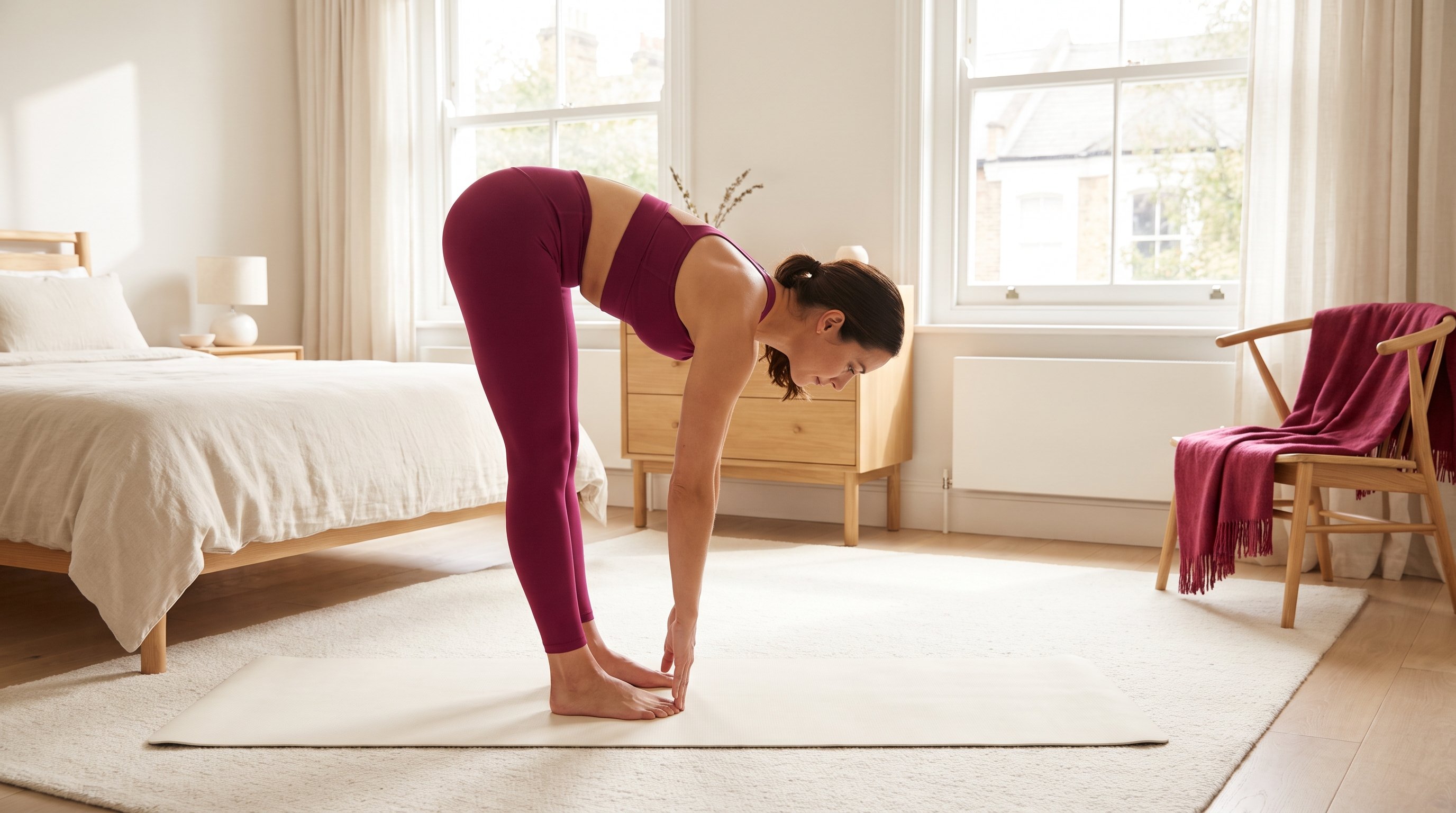
A habit that survives a rushed morning beats a routine that only works on perfect days. Five minutes done most days out-produces thirty minutes done occasionally, simply because it happens more often.
Who This Routine Fits and Where to Adjust It
The Complete Beginner
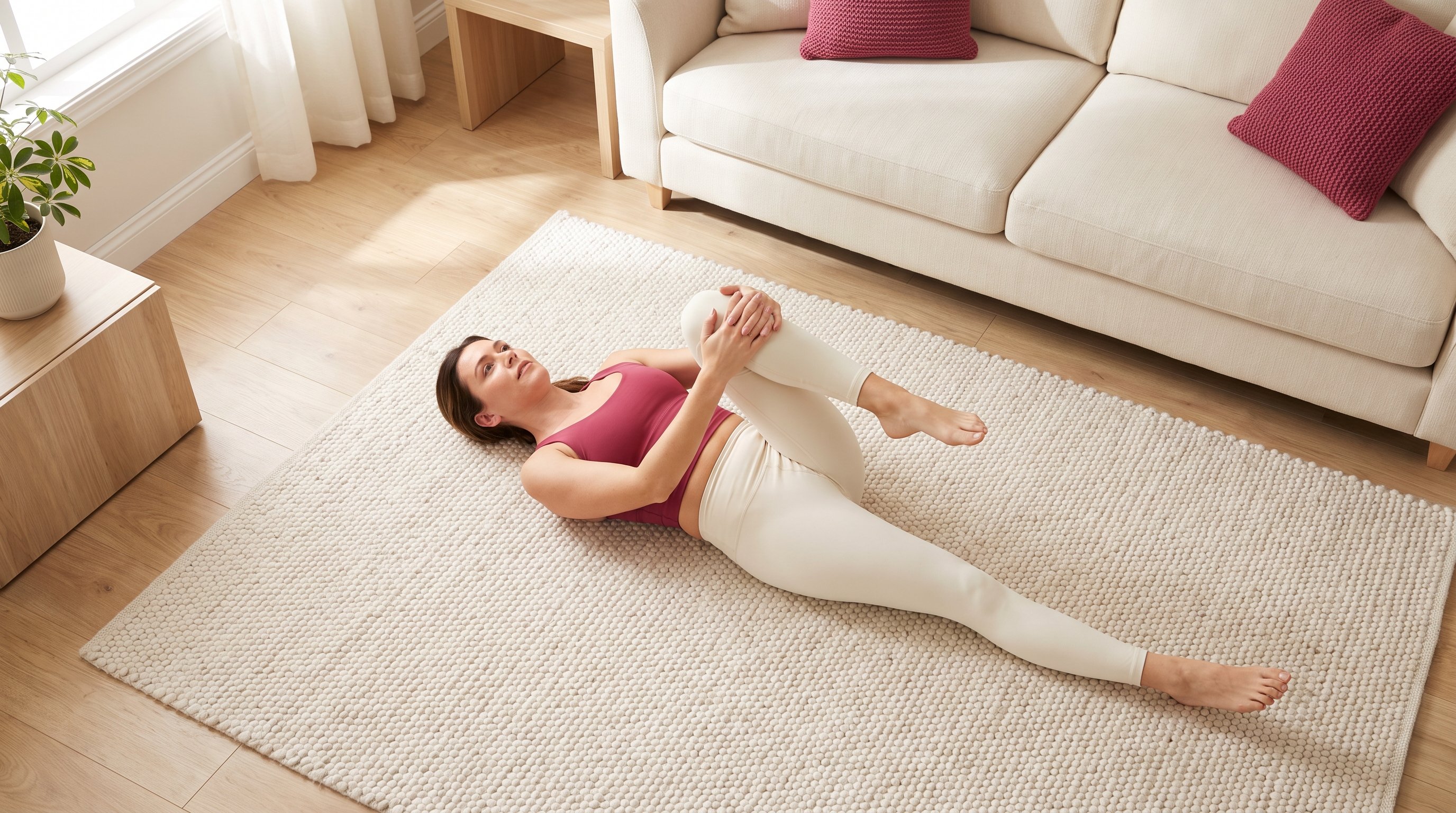
Start with two or three gentle holds - neck, shoulders, hamstrings - for about 20 seconds each, and don't worry about reaching further than feels comfortable.
The Busy Parent or Commuter
Do it standing beside the bed or kettle while something else is already happening, like the coffee brewing or the kids finding their shoes.
The Older Adult
Slower movements with longer holds and no bouncing work better here, and a chair nearby for balance support makes the whole thing less of a concern.
Anyone With a Desk Job
Focus on the hips, lower back and shoulders, since those are the areas that tighten most from sitting for long stretches during the day.
Fitting the Habit Around a Full Morning
The trick is attaching it to something that already happens every day - right after the alarm, right before brushing teeth, right after the kettle goes on.
No mat needed, no special clothes, no app required to start. It just needs a fixed spot in the sequence of the morning so it stops being a decision.
Once that's locked in, pairing it with something that tracks the rest of the day's habits helps the whole routine feel less like a one-off and more like part of a pattern. Blood Diet's progress trackers sit alongside step counts, water intake and weight in one place, so a quick stretch can be logged next to everything else without extra effort.
No, Stretching Won't Flatten Your Stomach or Melt Fat
This is the promise people secretly want: that a few minutes of movement will shrink a waistline or burn fat from a specific area.
It won't, and no form of exercise can target fat loss on one body part - the body draws on stored energy from all over, not from wherever it was just stretched or exercised.
The real benefit is mobility and a gentler start to the day. If weight loss is the goal, that comes down to the gap between what's eaten and what's burned overall, not where the movement happens.
Making Blood Diet Part of a Calmer Morning
A loosening routine works best when it's one small piece of a day that's already moving in the right direction, not a fix on its own.
Blood Diet pairs light exercises and guided meditations with a meal plan built around food you already like, so the morning habit has something to connect to later in the day.
The app's 100+ workouts and exercises include gentle options alongside more active ones, which means the five-minute routine can grow into something slightly longer without needing to start from scratch.

Eat Clean Every Day
Natural Weight Loss Plan
Starting Tomorrow Without Overcomplicating It
Pick three moves, give each one 20 seconds, and do them before anything else tomorrow morning - that's the whole plan, nothing more complicated than that.
Blood Diet can hold the rest of the routine - meals, water, steps, weight - so the only thing left to remember is those first five minutes by the bed.
FAQ
Not directly - it's too low-effort to create a meaningful calorie deficit on its own. It helps with stiffness and can make it easier to move more later in the day, which supports a bigger plan built around food and activity.
Short sessions matter because they actually get done, and a habit that happens daily beats a longer one that happens rarely. Consistency, not duration, is what makes the stiffness-easing effect reliable.
Two moves held for 15 seconds each still count and take under a minute total. The goal is keeping the habit alive, not hitting a perfect routine every single day.
No equipment is needed to begin - just a bit of floor space. Blood Diet can help track the habit alongside meals and water if having everything in one place helps it stick.
Share this post