Beginner Home Workout: The Honest Starting Guide
By:Author:Blood Diet Editorial
Updated on:October 18, 2026
- Does a Beginner Home Workout Actually Build Fitness
- How the Muscle and Habit Pieces Both Have to Work
- How Often a Beginner Should Actually Train at Home
- Why Home Training Beats Signing Up for a Gym
- Fitting a Home Workout Into an Already Busy Day
- No, a Home Workout Won't Slim One Body Part
- What Changes How Much a Home Workout Delivers
- Mistakes That Quietly Undo a Beginner Routine
- Making a Beginner Home Workout Easier With Blood Diet
- Starting Your First Week of Home Training
A beginner home workout works when it asks your muscles to do more than they're used to, done often enough that your body adapts. No gym, no equipment required - just a plan you'll actually repeat.
The mechanism is simple: muscles get stronger when they're loaded past their current capacity, and that capacity rises over weeks, not days. A chair, a wall and your own bodyweight can create that load just fine.
This guide covers whether home training actually builds anything, how much you need to do, why it beats a gym membership you'll skip, and where most beginners quietly fall off the routine.
Does a Beginner Home Workout Actually Build Fitness
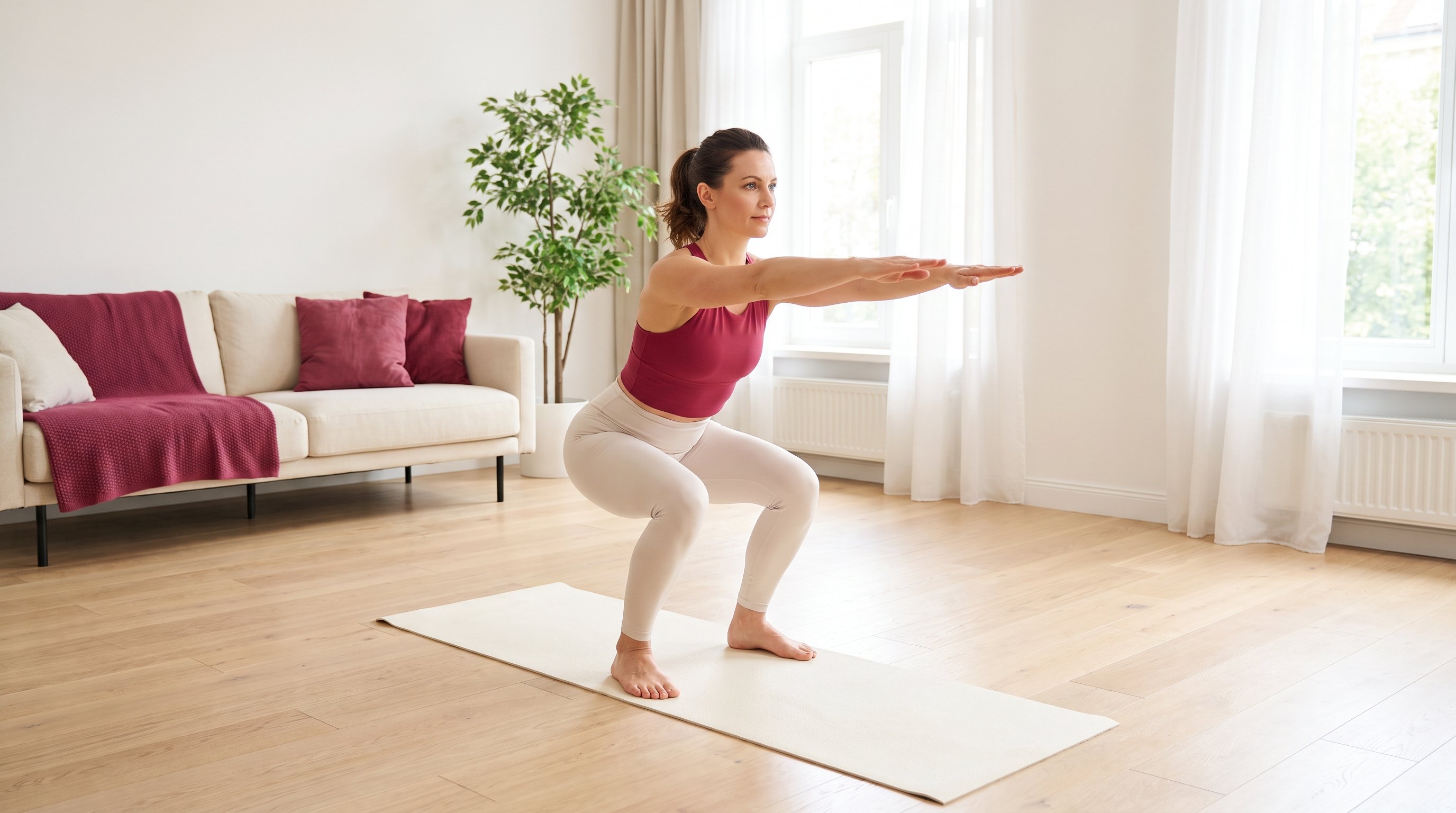
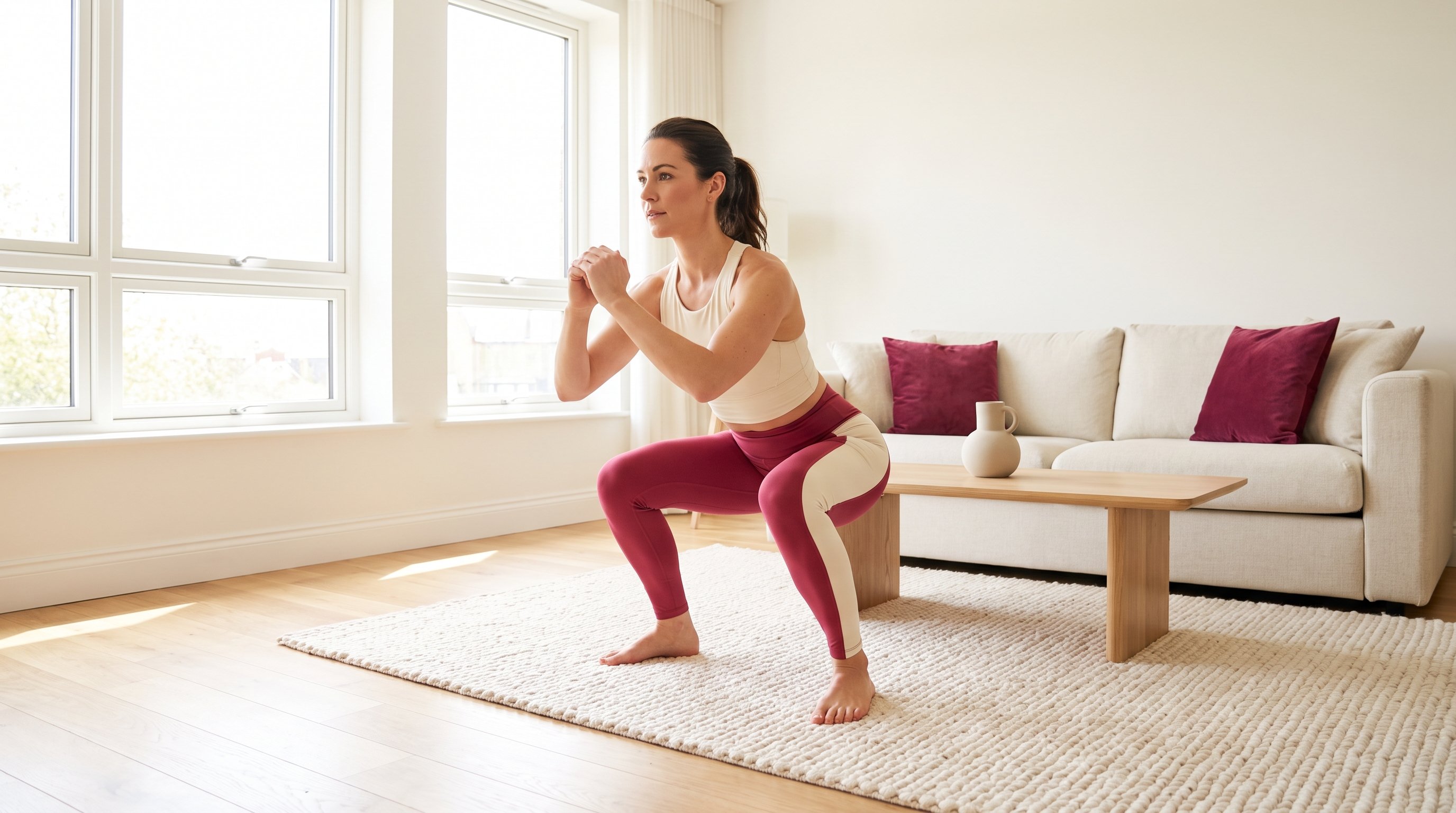
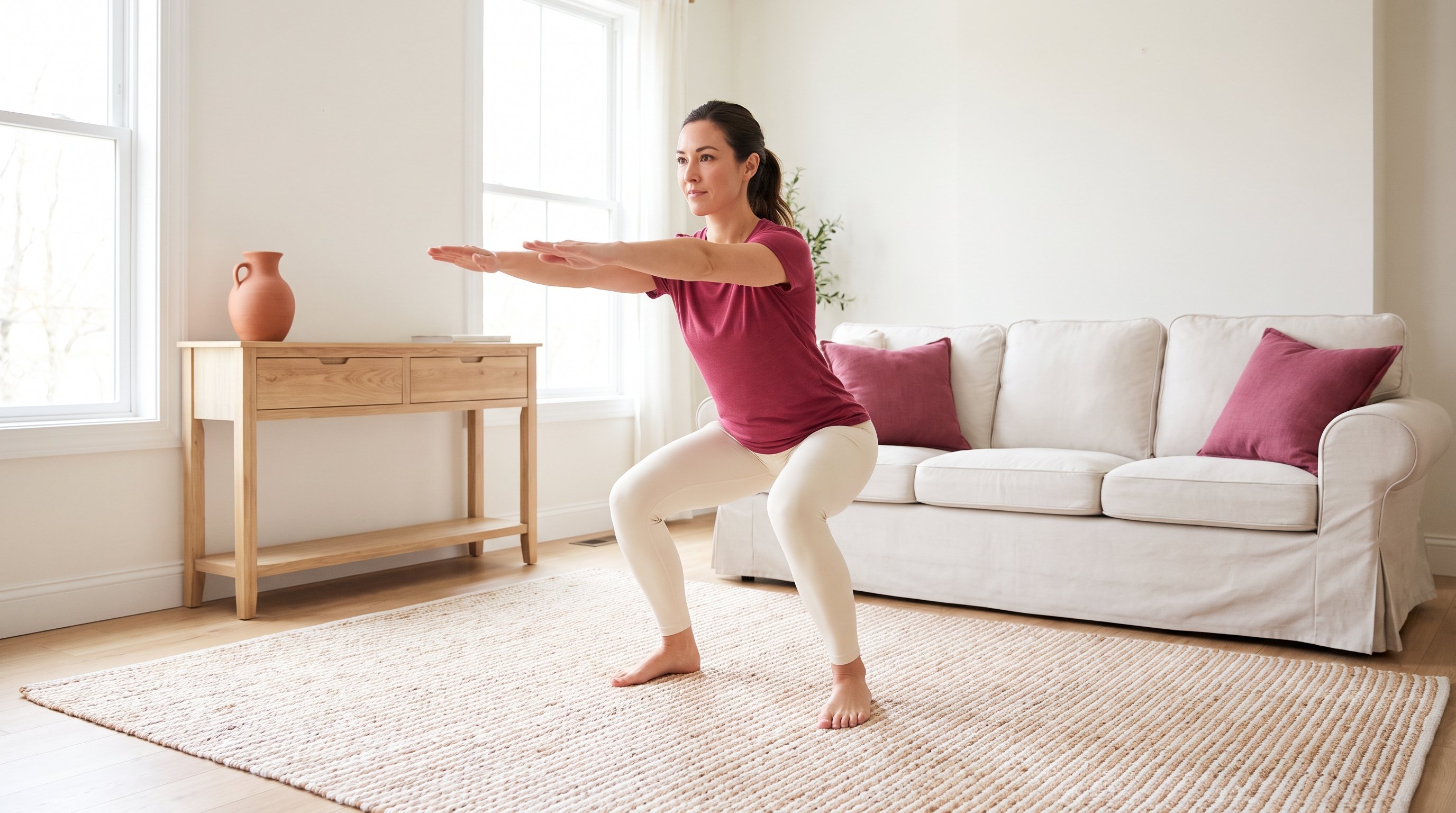
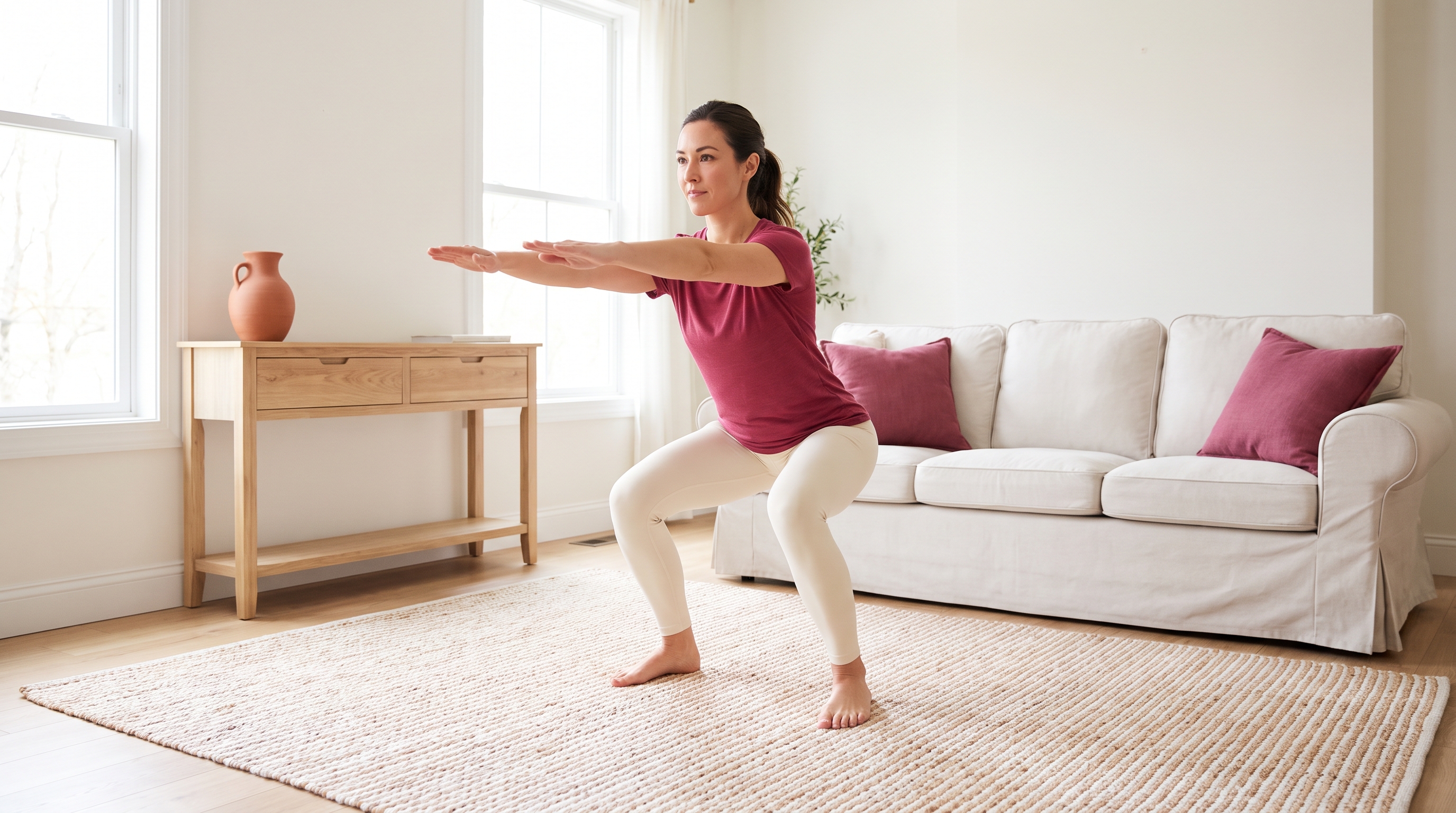
Yes, within limits. Bodyweight moves like squats, push-ups and lunges put real load on muscle, and for someone new to training, that load is more than enough to trigger change.
Here's the arithmetic: if you currently do zero structured exercise, doing 15 squats three times a week is a jump from 0 to 45 reps weekly.
That's not a rounding error, it's a new habit with a measurable workload attached to it. The honest caveat: bodyweight training has a ceiling.
Once your muscles adapt to your own bodyweight, progress slows unless you add reps, slow the tempo, or find another way to increase difficulty. For a beginner, that ceiling is usually months away, not weeks.
How the Muscle and Habit Pieces Both Have to Work
The Muscle Side
Every squat, push-up or lunge creates tiny amounts of stress in the muscle fibres being used. Rest and repetition let those fibres rebuild slightly stronger, which is why the same move feels easier a few weeks in.
The Habit Side
None of that rebuilding happens if the workout only occurs once. The second part of the mechanism is just showing up on a schedule regular enough that the body never fully reverts between sessions.
How Often a Beginner Should Actually Train at Home
Picking a Frequency You'll Keep
Three sessions a week, with a rest day between each, gives muscles time to rebuild without the schedule feeling heavy. That's roughly 20-30 minutes, three times, which is a smaller ask than most people assume a 'workout' requires.
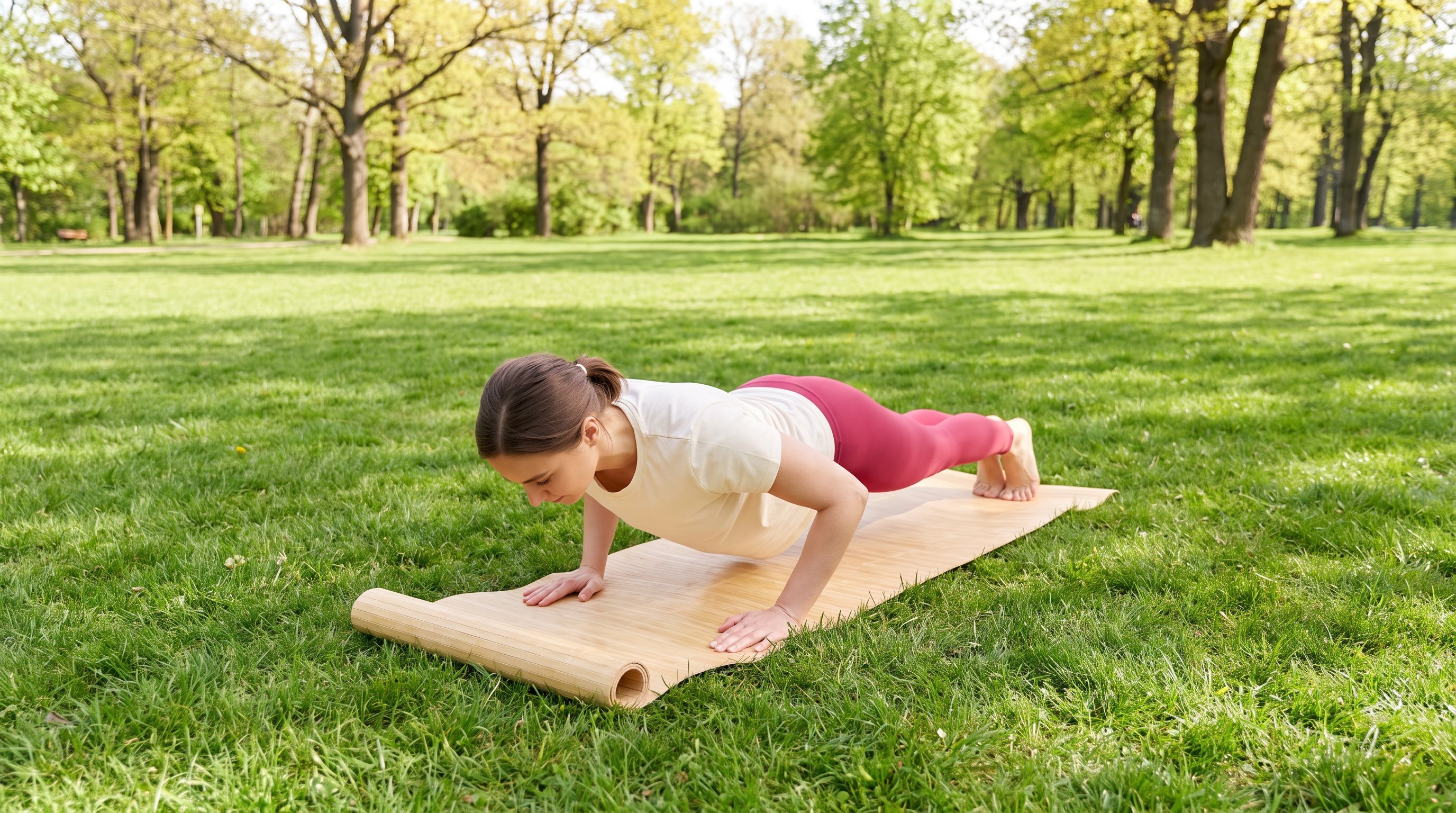
A simple weekly structure removes the guesswork of what to do on which day.
| Day | Focus | Duration |
|---|---|---|
| Monday | Full body basics | 20 minutes |
| Tuesday | Rest or light walk | Optional |
| Wednesday | Full body basics | 20 minutes |
| Thursday | Rest or light walk | Optional |
| Friday | Full body basics | 20 minutes |
Why Home Training Beats Signing Up for a Gym
A gym membership and a living-room routine can build the same strength. The difference is friction: one requires packing a bag, travelling, finding equipment and travelling back.
The other requires clearing a small patch of floor. Lower friction means more sessions actually happen, and a workout that happens beats a better workout that gets skipped.
This isn't an argument that gyms don't work - it's an argument that for a true beginner, the version with fewer barriers tends to get repeated for longer, and repetition is what drives the result.
Fitting a Home Workout Into an Already Busy Day
Most people don't fail at home workouts because the moves are too hard. They fail because the session never gets a fixed slot in the day, so it keeps losing to whatever feels more urgent.
Attaching the workout to something already happening - right after coffee, right before a shower - removes the decision each day.
Nutrition sits alongside this. Blood Diet pairs its short home workouts with a meal plan built around food you already like, so the eating side of the equation isn't a separate project you have to figure out on top of training.
No, a Home Workout Won't Slim One Body Part
A common hope is that enough squats will shrink the hips, or enough crunches will flatten the stomach. That's not how bodies lose fat.
Fat loss happens across the whole body, set by overall energy balance, not by which muscle just worked. Training a muscle makes that muscle stronger, it doesn't pull fat specifically from the skin above it.
The honest version: a consistent home workout plus a sustainable eating pattern changes your whole-body composition over time. Which area changes first is down to genetics, not which exercise you picked.
What Changes How Much a Home Workout Delivers
Three factors decide whether a beginner routine turns into real progress or stalls out.
The Biggest Levers
- Consistency over weeks - three sessions done every week for two months beats five sessions done once then abandoned.
- Gradual progression - adding a few reps or a slower tempo every couple of weeks keeps the stimulus from going stale.
- Recovery between sessions - skipping rest days doesn't speed up results, it just means muscles never finish rebuilding.
Mistakes That Quietly Undo a Beginner Routine
Starting With Too Much
Doing an hour-long routine in week one often leads to soreness so severe the next session gets skipped. Starting with 15-20 minutes and building up protects the habit more than it limits the result.
Training Every Single Day
More isn't automatically better when muscles need recovery time to rebuild. Three or four sessions a week with rest days in between tends to outperform daily sessions that lead to burnout.

Skipping a Warm-Up
Jumping straight into squats or lunges from a cold start makes the first few reps feel harder than they need to. A couple of minutes of marching on the spot or arm circles solves this.
Judging Progress Daily
Strength and energy don't move in a straight line day to day. Checking progress weekly, not daily, gives a truer picture and avoids the discouragement of a single off day.
Making a Beginner Home Workout Easier With Blood Diet
Picking exercises is only part of the job - knowing what to do on which day, and whether you're actually keeping it up, is the part that usually gets dropped first.
Blood Diet includes 100+ workouts and exercises built for exactly this stage, from simple bodyweight moves to light yoga and guided meditation, so there's always a next session queued up instead of a blank decision.
Progress tracking and visualization keep steps, water intake and weight in one place, so you can see the week add up instead of relying on memory or guesswork.
Motivating challenges give the routine a bit of structure and accountability beyond just 'try to remember to work out', which is often the missing piece for beginners training alone at home.
Eat Clean Every Day
Natural Weight Loss Plan
Starting Your First Week of Home Training
The only move that matters right now is picking three days this week and putting 20 minutes of basic bodyweight exercise on the calendar, not waiting for a perfect plan to appear first.
Blood Diet can take the guesswork out of which exercises to do and what to eat alongside them, but the first rep still has to happen on the floor of your own home.
FAQ
It contributes by building muscle and burning some energy, but weight loss itself depends mostly on what you eat. Pairing a home workout with a sustainable eating pattern is what moves the needle, not the workout alone.
For a true beginner, bodyweight training provides plenty of load to build initial strength. Over time, adding resistance or increasing reps keeps challenging the muscles once bodyweight alone stops feeling hard.
Most beginner routines fit in the footprint of a yoga mat, so a small cleared patch of floor is usually enough. Moves like squats, push-ups and lunges need almost no room to perform safely.
One missed day doesn't undo progress, so the plan is simply to pick back up at the next scheduled session rather than trying to make up for it. Blood Diet's trackers and challenges can help rebuild the routine quickly after a gap instead of letting it slide for weeks.
Share this post