Leg Workout At Home: A Realistic No-Equipment Plan
By:Author:Blood Diet Editorial
Updated on:October 18, 2026
- Does a Leg Workout at Home Actually Build Strength?
- How the Muscles in a Home Leg Routine Actually Respond
- How Often Should You Train Legs at Home
- Why Home Training Beats the Gym Commute Habit
- Making a Leg Routine Work Around a Full Schedule
- No, Leg Exercises Won't Slim Just Your Thighs
- What Changes How Much a Home Leg Session Delivers
- Mistakes That Quietly Undo a Home Leg Routine
- Building a Leg Workout Habit With Blood Diet
- Starting Your Own Home Leg Routine This Week
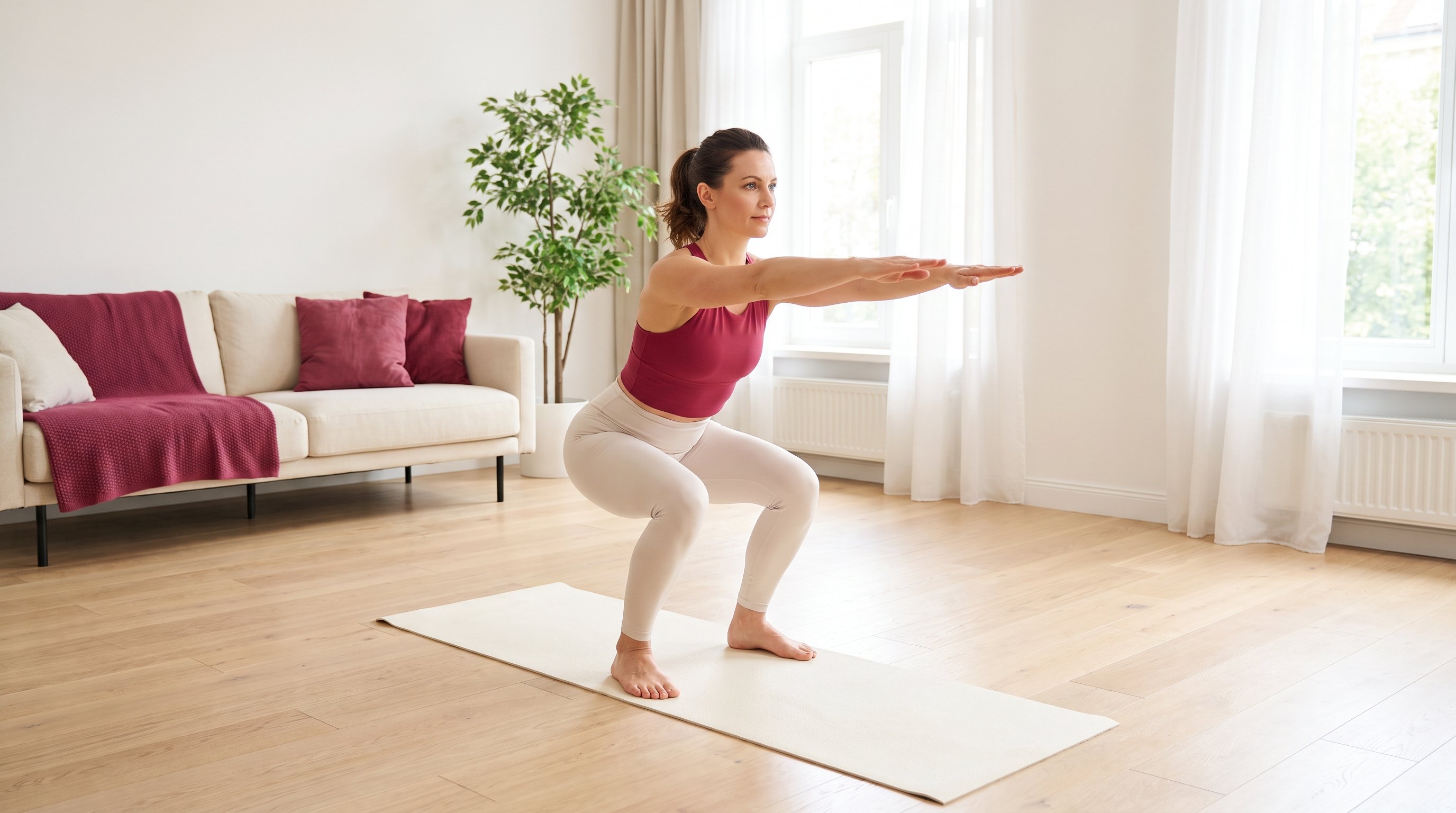
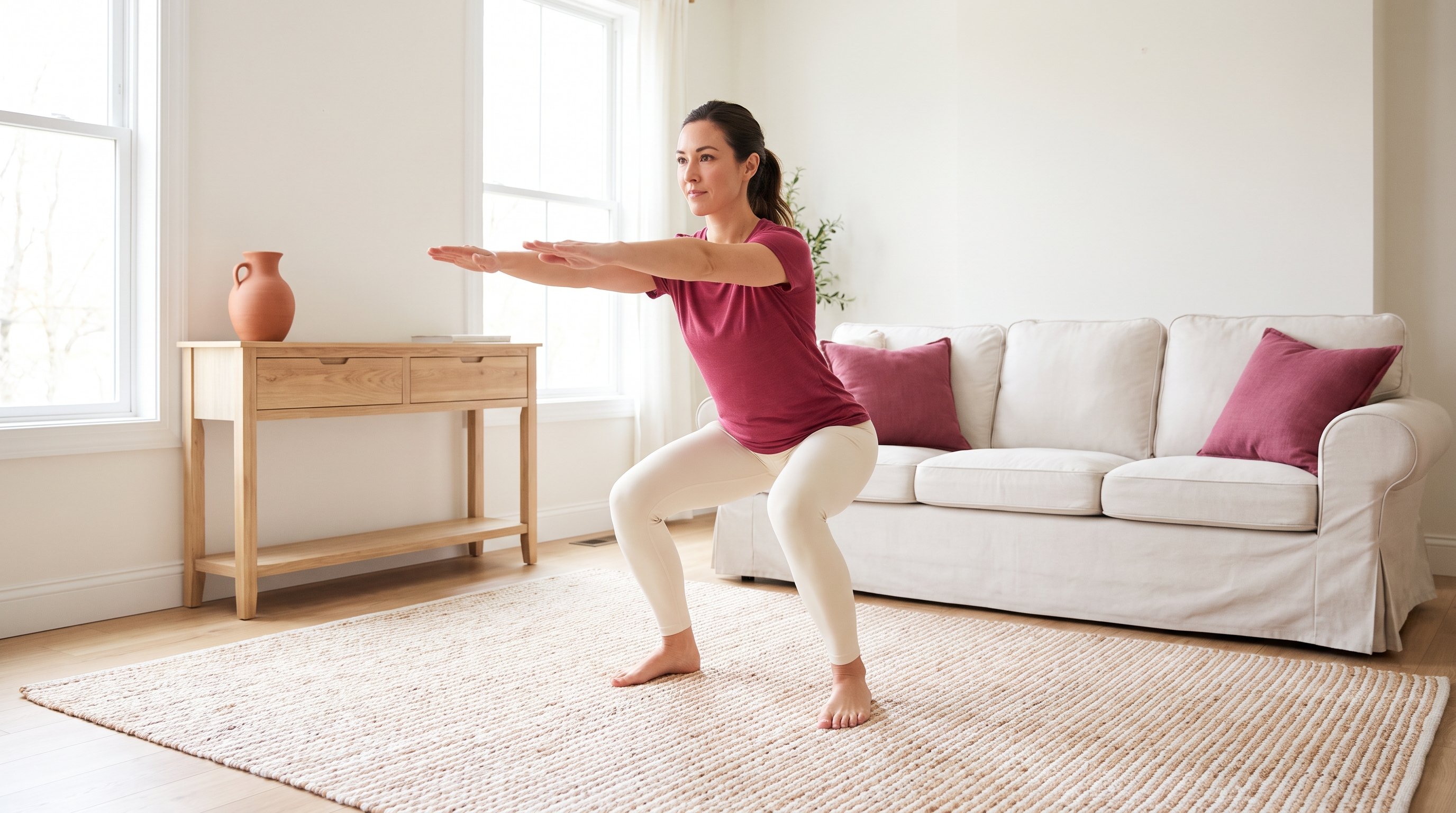
A leg workout at home works because bodyweight moves like squats, lunges and step-ups load the same muscles a gym machine would, just with your own weight instead of a stack of plates.
The mechanism is simple: muscles respond to tension and repetition, not to the brand of equipment creating that tension. Push a muscle group past what it's used to and it adapts, whether that push comes from a barbell or from forty bodyweight squats in your kitchen.
This guide covers whether home leg training actually works, how to structure it, how often to do it, and the mistakes that usually get in the way.
Does a Leg Workout at Home Actually Build Strength?
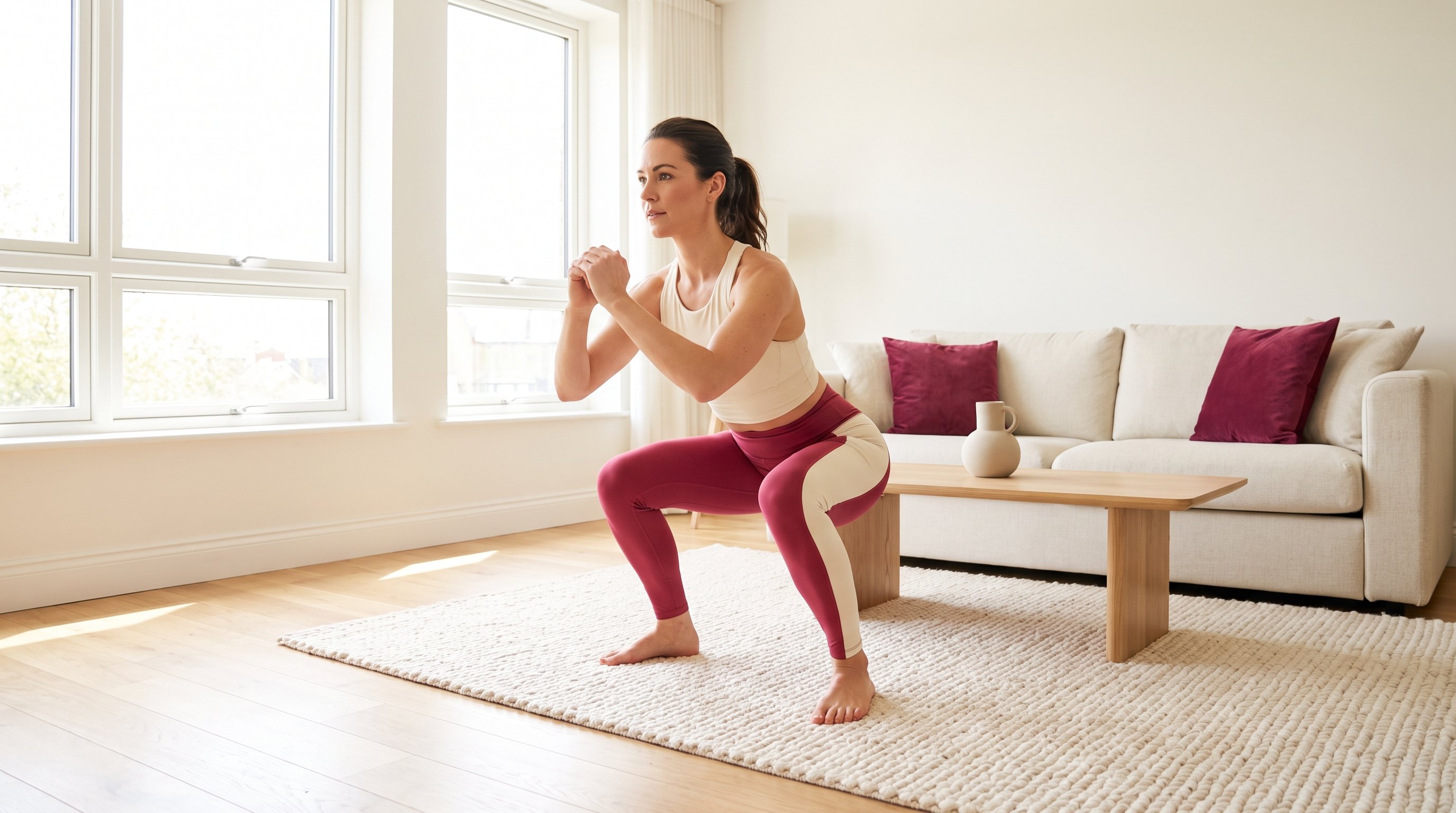
Yes, within limits. Bodyweight squats, lunges, glute bridges and calf raises all create enough resistance to challenge leg muscles, especially if you've not trained them with any structure before.
The honest arithmetic: a bodyweight squat might feel easy at rep ten, harder at rep twenty-five, and genuinely tough at rep forty. That rising difficulty, called volume, is doing the same job that adding weight would do in a gym.
There's a ceiling. Once bodyweight squats stop feeling challenging even at high reps, progress slows unless you add variations that increase difficulty, like single-leg versions or slower tempos.
That ceiling is real but it's further away than most people think, and most beginners never get close to it in the first few months of consistent training.
How the Muscles in a Home Leg Routine Actually Respond
Two things happen when you train legs at home without weights, and both matter for why this works at all.
Repetition Creates the Load
Without external weight, the only way to increase difficulty is to do more reps, slow the movement down, or change the angle, like going from a two-leg squat to a single-leg one. Each of those raises the time your muscles spend under tension, which is the actual trigger for adaptation.
Recovery Is Where the Change Actually Happens
The workout itself doesn't build anything - it just creates the stimulus. The muscle repairs and strengthens in the day or two afterwards, which is why spacing sessions out matters as much as doing them.
Both parts need to be in place. Skip the repetition and there's no stimulus; skip the recovery and the stimulus never turns into anything.
How Often Should You Train Legs at Home
Two to three sessions a week is enough for most people starting out, with at least one rest day between sessions so the muscle groups you worked can recover.
Building a Week Around It
A simple split is two leg-focused days and one lighter day that mixes legs with other movement, like walking or stretching. That gives the muscles real recovery time without losing momentum between sessions.
| Day | Focus |
|---|---|
| Monday | Squats, lunges, glute bridges |
| Tuesday | Rest or light walking |
| Wednesday | Step-ups, calf raises, wall sits |
| Thursday | Rest or light walking |
| Friday | Full mixed leg circuit |
Adjust the days to fit your week, the structure matters more than the exact calendar.
Why Home Training Beats the Gym Commute Habit
A gym leg day with machines and free weights can build strength faster per session, but only if you actually get there.
The real comparison isn't bodyweight squats versus a leg press machine, it's a workout you do three times a week at home versus a gym session you plan for but skip because of the drive, the changing rooms and the twenty minutes just getting there.

Consistency beats intensity almost every time. A moderate home session done three times a week for months adds up to more total work than an intense gym plan that happens twice before motivation drops.
The easier route isn't the lazy option here, it's the one with fewer points where you can talk yourself out of showing up.
Making a Leg Routine Work Around a Full Schedule
A home leg workout fits into gaps a gym session never could, ten minutes before a shower, during a work call on mute, or while something's in the oven.
That flexibility is the whole point. No commute, no waiting for equipment, no packed gym bag sitting by the door as a reminder of something you didn't get to.
A fitness app's library of 100+ workouts and exercises includes simple bodyweight leg routines you can follow without any equipment, which makes it easier to slot a session into a day that's already full.
Pairing that with progress tracking also means you can see sessions logged over weeks, not just remember that you meant to do them.
No, Leg Exercises Won't Slim Just Your Thighs
This one needs saying plainly: no exercise, home or otherwise, shrinks fat from one specific area of the body.
The body doesn't let you choose where it draws energy from. Squats and lunges build and strengthen the muscle underneath, but whether fat changes anywhere, including the thighs, depends on your overall energy balance, not which body part you trained.
The real promise is more modest and more honest: consistent leg training builds strength and muscle tone in the legs over time, and that's worth doing on its own terms.
What Changes How Much a Home Leg Session Delivers
Three factors matter more than which specific exercises make the list.
What Actually Moves the Needle
- How close you push to fatigue - stopping ten reps before your legs feel tired leaves most of the benefit on the table.
- How consistent the weekly pattern is - two to three sessions spread across the week beats one long session followed by a gap.
- Whether you add difficulty over time - staying on the same ten easy squats for months gives the muscle no reason to keep adapting.
Get those three right and the exact mix of lunges, squats or step-ups matters far less than people assume.
Mistakes That Quietly Undo a Home Leg Routine
Stopping at the First Sign of Effort
Many people treat the first burn in the thighs as a stopping point rather than the start of the useful part. Push a few more reps past that point, within reason, and the session actually does something.
Training Legs Every Single Day
More isn't automatically better, especially without rest days built in. Muscles need recovery time between sessions, so daily leg training without a break usually just adds fatigue without adding strength.

Never Changing the Exercise Difficulty
The same ten bodyweight squats that felt hard in week one will feel easy by week six. Swap to single-leg versions, slower tempos or added step-ups to keep the challenge where it needs to be.
Skipping Form for Speed
Rushing through lunges or squats to get the set over with reduces how much tension the muscle actually experiences. Slower, controlled reps do more with the same number of repetitions.
Building a Leg Workout Habit With Blood Diet
A leg routine sticks best when it's part of something bigger than just the exercises themselves.
Blood Diet brings together simple home workouts, a nutrition plan built around food you already like, and progress tracking for steps, water and weight, so a leg session isn't a standalone task you have to remember on its own.
The app's motivating challenges are designed to keep you showing up on the days motivation runs low, and its guided meditations help take the stress out of fitting movement into an already busy routine.
Eat Clean Every Day
Natural Weight Loss Plan
Starting Your Own Home Leg Routine This Week
Pick two or three days this week, set aside ten minutes, and run through squats, lunges and glute bridges until your legs genuinely feel it.
That's the whole starting point, nothing more complicated is needed. A fitness app can help turn that first week into a routine that actually lasts, with workouts, tracking and reminders all in one place.
FAQ
For building general leg strength and muscle tone, yes, bodyweight training covers most of what a beginner or intermediate gym routine would offer. For very advanced strength goals it eventually has limits, but most people never reach that ceiling.
It only feels easy if the reps stay low or the variations never change. Push closer to fatigue, add single-leg moves or slow the tempo, and bodyweight training stops feeling easy quickly.
Mild soreness after a new routine is normal and usually eases within a few days as the body adjusts. Spacing sessions out with rest days, as covered above, keeps soreness from piling up session after session.
Blood Diet pairs simple home leg workouts with a nutrition plan and progress trackers, so the exercise side of things doesn't sit separate from everything else you're trying to build. It's meant to make the whole routine easier to stick with, not just the workout part.
Share this post