High Protein Breakfast: The Honest Guide
By:Author:Blood Diet Editorial
Updated on:October 18, 2026
- Does Eating Protein First Thing Really Help?
- How a Protein-Heavy Morning Changes Your Appetite
- How Much Protein Actually Belongs at Breakfast
- Protein Breakfasts Beat Skipping Breakfast Entirely
- Making a Protein Breakfast Work on a Rushed Morning
- No, Protein Won't Target Fat on Your Belly or Thighs
- What Actually Changes How Well This Works for You
- Mistakes That Quietly Undercut a Protein Breakfast
- Building a Protein-Rich Breakfast Habit With Blood Diet
- Starting Tomorrow's Breakfast Without Overthinking It
A high protein breakfast works because protein is the macronutrient that keeps you fullest for the fewest calories, which makes it easier to eat less later without feeling deprived.
The mechanism is simple appetite physiology, not magic: protein takes longer to digest and triggers fullness signals more strongly than carbs or fat, so the rest of your day gets easier to manage.
This guide covers whether it actually works, how much protein counts as sufficient, what a realistic morning looks like, where people trip up, and how to build the habit so it sticks.
Does Eating Protein First Thing Really Help?
Yes, with a plain mechanism behind it: a breakfast built around protein keeps blood sugar steadier and hunger lower through the morning than one built mostly around refined carbs.
Here's the arithmetic. Say your usual breakfast is 400 calories of pastry and juice, and you swap it for 400 calories of eggs, Greek yoghurt and fruit with triple the protein content.
Same calories go in, but you're less likely to reach for a mid-morning snack because you're not crashing two hours later - and that avoided snack is where the deficit actually comes from.
Nobody loses weight from breakfast alone. What changes is how much easier the rest of the day's deficit becomes to hold.
How a Protein-Heavy Morning Changes Your Appetite
There are two moving parts here: what protein does to fullness hormones, and what it does to blood sugar stability. Both play a role in why the first meal of the day matters more than people assume.
Fullness Signals Respond to Protein Faster
Protein slows digestion more than carbs or fat, which means the stomach stays fuller for longer and sends fewer hunger signals before lunchtime.
Steadier Blood Sugar Means Fewer Crashes
A carb-heavy breakfast spikes blood sugar and then drops it, which is what drives the 11am slump and the snack that follows it; protein blunts that spike.
Put together, these two effects don't burn anything on their own - they just make it less of a fight to eat within your calorie target for the rest of the day.
How Much Protein Actually Belongs at Breakfast
A useful working target is somewhere between 25 and 40 grams of protein at breakfast, which is enough to noticeably change fullness without needing a kitchen scale for every meal.
What That Looks Like in Real Food
Three eggs gets you around 18 grams, so pairing them with a side of cottage cheese or a slice of turkey closes the gap to 25-plus without much effort.
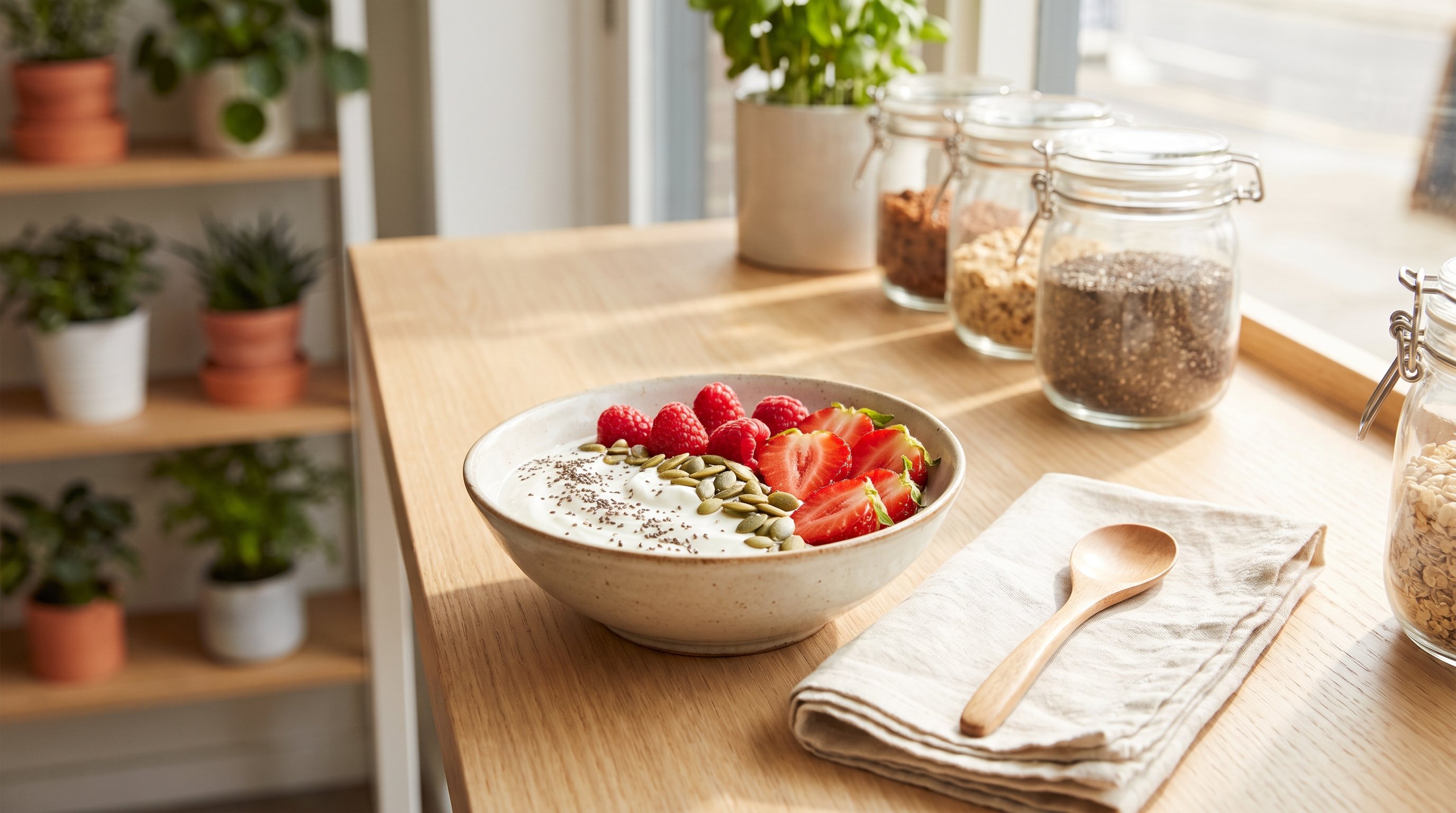
The table below gives a few common breakfast options and roughly where their protein lands, so you can see the gap between an average plate and one built for satiety.
| Breakfast Option | Approx Protein |
|---|---|
| Two slices of toast with jam | About 6g |
| Bowl of cereal with milk | About 8g |
| Three eggs, plain | About 18g |
| Greek yoghurt with nuts | About 20g |
| Eggs plus cottage cheese | About 30g |
Protein Breakfasts Beat Skipping Breakfast Entirely
Skipping breakfast to save calories sounds efficient on paper, but it often backfires because hunger builds unchecked until lunch, and that's when portion control gets hard.
A protein-rich morning takes more planning up front - you can't just grab toast - but it pays that time back by making the rest of the day calmer.
The easier route wins here because it needs less willpower later, not because the breakfast itself is doing anything special to your metabolism.
Making a Protein Breakfast Work on a Rushed Morning
Most mornings don't leave time to cook eggs from scratch, so the realistic version of this habit relies on a short list of grab-and-go options you've already prepped.
Boiled eggs made in a batch, a tub of cottage cheese, or overnight oats with a scoop of yoghurt all hit the protein target without needing a stove at 7am.
This is where a meal plan built around food you already like helps, since Blood Diet lays out breakfast options alongside the rest of your day so you're not guessing at protein counts every morning.
No, Protein Won't Target Fat on Your Belly or Thighs
A protein-rich morning will not burn fat from any one spot on your body, no matter how many eggs are on the plate - the body doesn't choose where it loses fat from.
What protein actually does is help you hold a calorie deficit with less hunger, and that deficit is what leads to fat loss across the body as a whole, on its own timeline.
If someone promises this will flatten your stomach, that's not how digestion or fat storage works - the honest answer is slower and less specific than that.
What Actually Changes How Well This Works for You
Three things decide whether a protein-rich morning makes a real difference to your day, and they matter more than which specific foods you choose.
The Factors That Matter Most
- Total protein amount - 10 grams barely moves the needle, but 25 to 40 grams noticeably changes fullness through the morning.
- Consistency across the week - eating this way on Monday and toast the rest of the week won't show any pattern worth noticing.
- What you pair it with - fibre from fruit or vegetables alongside the protein extends the fullness effect even further.

Mistakes That Quietly Undercut a Protein Breakfast
Counting a Protein Bar As the Whole Meal
Many bars have only 10-15 grams of protein and plenty of added sugar, so check the label rather than assuming the word protein on the wrapper means it's enough.
Skipping Breakfast on Busy Days
The days you're rushed are exactly when a planned grab-and-go option matters most, since that's when a skipped meal turns into mindless snacking.
Loading Up on Protein but Ignoring Total Calories
A protein-rich breakfast still has calories, and piling on extra bacon or cheese without noticing can cancel out the deficit you're trying to hold.
Treating Breakfast Protein As a Free Pass
A good breakfast doesn't undo a poor lunch and dinner, it just makes those meals easier to manage.
Building a Protein-Rich Breakfast Habit With Blood Diet
Working out protein grams every morning gets old fast, which is exactly where Blood Diet earns its keep.
Blood Diet pairs a tailored-for-you meal plan with recipes already built around your food preferences, so breakfast options come with the protein thinking done for you.
Progress tracking keeps water, weight and steps in one place too, so you can see whether the breakfast habit is actually sticking rather than guessing from memory.
Eat Clean Every Day
Natural Weight Loss Plan
Starting Tomorrow's Breakfast Without Overthinking It
Pick one swap for tomorrow - eggs instead of cereal, or yoghurt instead of toast - and see how the morning feels without snacking before lunch.
That's the whole test. Blood Diet can take the guesswork out of what comes next once that one swap feels normal.
FAQ
It can make a calorie deficit easier to hold because you feel fuller for longer, but the breakfast itself doesn't burn fat on its own.
Not if you swap rather than add - the table above shows options at similar calorie levels with very different protein counts.
Batch-prepped boiled eggs, cottage cheese tubs, or overnight oats need zero cooking time and still hit the protein target; Blood Diet's recipe list includes grab-and-go options for exactly this problem.
Check the actual protein grams rather than the label claims, since many quick breakfasts fall well under 20 grams and won't hold hunger off for long.
Share this post