How To Meal Prep For The Week: A Realistic Plan
By:Author:Blood Diet Editorial
Updated on:October 18, 2026
- A Sample Week Built Around Three Batches
- How Many Meals to Prep and How Often
- Why Batching Beats Cooking From Scratch Daily
- Fitting Meal Prep Into a Week That's Already Full
- Who Meal Prep Suits and How to Adjust It
- Where the Meal Prep Habit Usually Falls Apart
- Making Weekly Meal Prep Easier With Blood Diet
- Turning One Good Prep Day Into a Habit
Meal prepping for the week means cooking your main meals in batches on one or two set days, so the rest of the week is just reheating and assembling. The direct answer: pick two or three meals you actually like, double or triple the recipe, and store it in portioned containers.
The mechanism is simple. Decisions made once, while you're not hungry or rushed, are better decisions than ones made at 7pm with an empty fridge and a takeaway app open.
This guide covers what a prepped week can look like, how much to actually cook, why batching beats daily cooking for most people, and how to keep the habit alive past the first few weeks.
A Sample Week Built Around Three Batches
Here's a version of a prepped week that doesn't need a chef's knife skills or a free Sunday afternoon.
A Realistic Weekly Rhythm
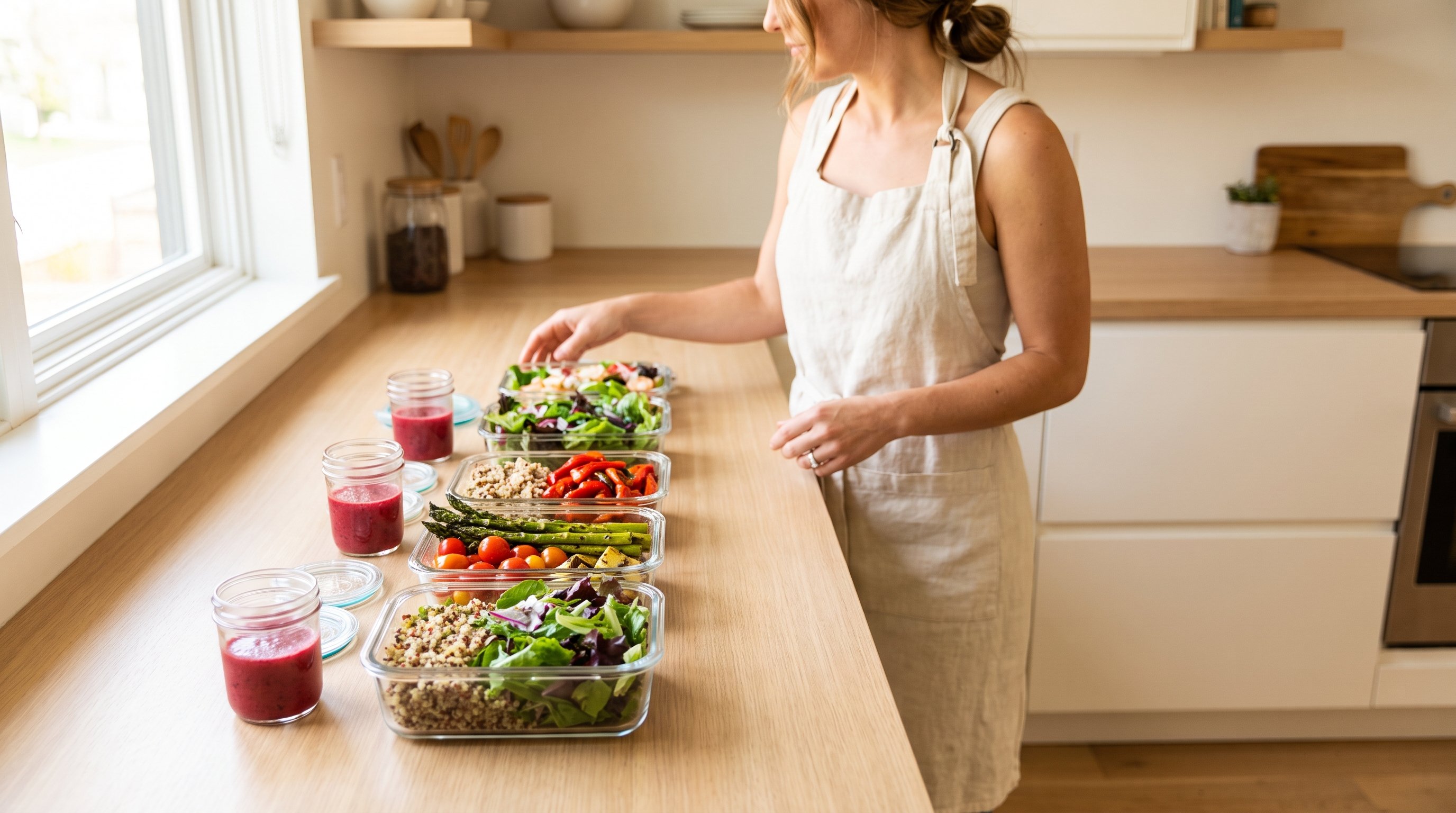
- Sunday - cook a protein base (chicken, beans, tofu), a grain, and roast a tray of vegetables, enough for four lunches.
- Monday to Thursday lunch - combine the prepped protein, grain and vegetables into a new bowl each day with a different sauce or spice.
- Wednesday evening - a short second cook, maybe 20 minutes, to refresh the vegetables and keep things from tasting repetitive.
- Breakfasts - overnight oats or egg muffins made in one batch on Sunday, covering five mornings.
- Dinners - kept simple and semi-fresh, built from the same prepped protein plus something quick like a stir-fry or salad.
Nothing here demands a single big marathon cook. It's three smaller sessions that add up to a week of meals you don't have to think about.
How Many Meals to Prep and How Often
A Starting Quantity You Can Adjust
A common starting point is prepping enough for 8 to 10 meals across two sessions a week, rather than all 21 meals in one go. That keeps the food fresher and the cooking session shorter.
| Meal Type | Suggested Amount | How Often To Cook |
|---|---|---|
| Lunches | 4 to 5 portions | One main batch |
| Breakfasts | 5 portions | One quick batch |
| Dinners | 2 to 3 portions | Light prep, cook fresh rest |
| Snacks | Prep as needed | Ongoing, not batched |
Adjust the numbers to match how many days you're actually eating at home. There's no fixed rule, just enough cooked food that the fridge, not your willpower, is doing the deciding.
Why Batching Beats Cooking From Scratch Daily
Cooking a fresh meal from scratch every single night sounds ideal, but it asks for the same decision and the same energy seven times a week instead of once or twice.
Batch prepping wins on adherence, not on taste or nutrition quality, because the hard part of cooking - deciding what to make, shopping, chopping - happens once instead of daily.
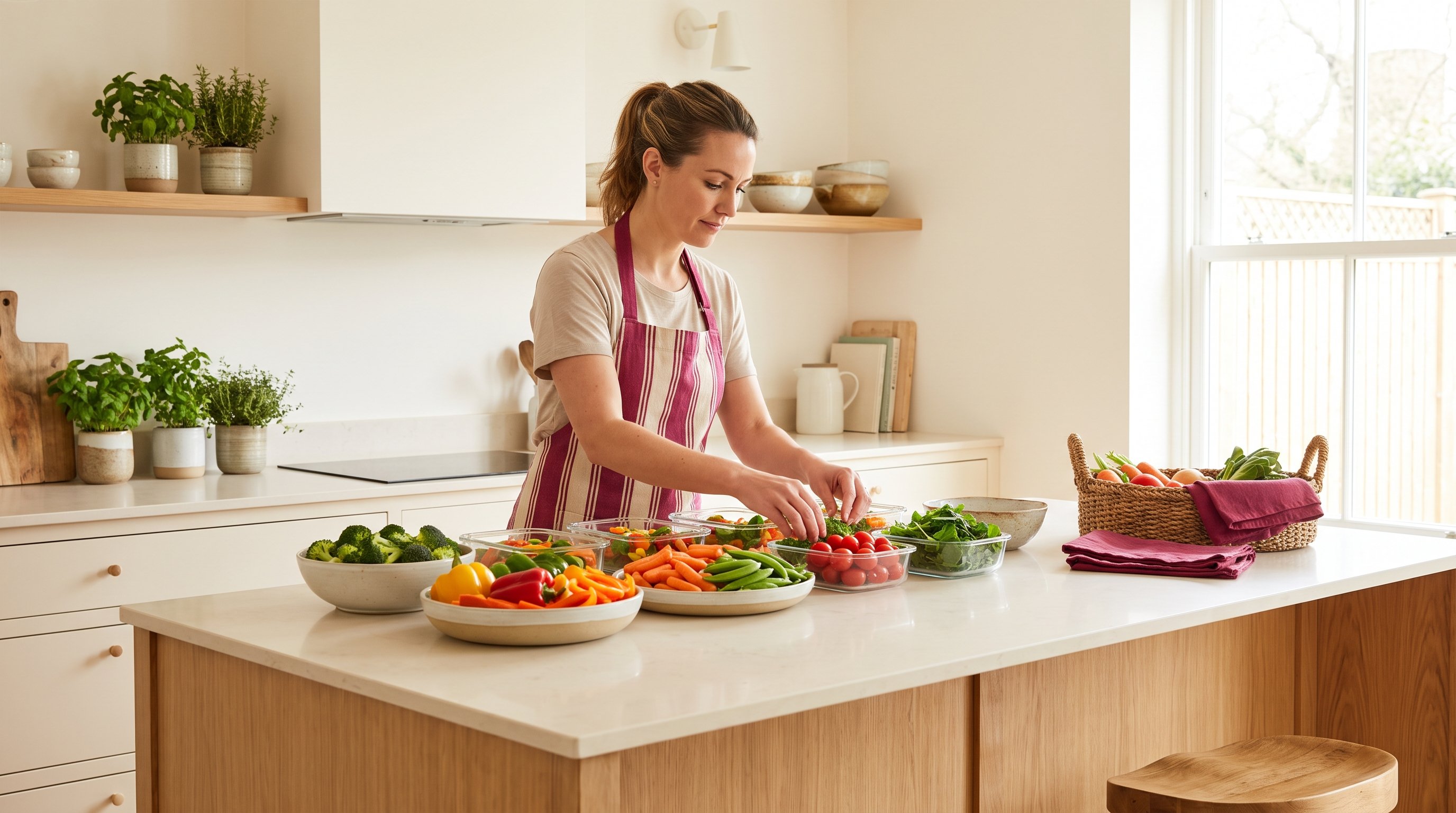
The food itself doesn't have to be different. The only thing that changes is how many times you have to summon the motivation to start cooking, and fewer start-up moments means fewer chances to skip the meal and reach for something quicker instead.
Fitting Meal Prep Into a Week That's Already Full
Most weeks don't have a spare three hours sitting around waiting to be filled with chopping and simmering, so prep has to slot into time that already exists.
That might mean cooking while something else is happening in the background, prepping during a meal you're already making, or splitting the work across two short sessions instead of one long one.
Blood Diet's recipes are built to support this kind of batching, with meal plans based on your blood group that give you a starting list of what to cook and in what quantity, so the planning part is already done before you pick up a knife.
Who Meal Prep Suits and How to Adjust It
If You're New to This
Start with just one meal a day, probably lunch, and leave breakfast and dinner alone until the habit sticks. Trying to prep all three meals in week one is usually where people burn out and quit by week two.
If Your Week Is Unpredictable
Prep components rather than finished meals, so a cooked grain, a roasted vegetable tray and a protein can be mixed into whatever you're in the mood for that day. This also means a missed prep session doesn't wreck the whole week, since there's still something usable in the fridge.
If You're Cooking for One
Smaller batches freeze well, so cook a slightly larger portion than you need and freeze half in individual containers for a week when you don't feel like cooking at all. This avoids the common trap of over-prepping and throwing out the same bowl of rice on day six.
If You're Prepping for a Family
Cook the base components in bulk but let each person customise their own bowl with sauces, toppings or sides, so one prep session doesn't mean one meal everyone has to eat identically. This cuts down on separate cooking for different tastes without losing the time-saving part of prepping.
Where the Meal Prep Habit Usually Falls Apart
The first week or two of meal prepping often feels easy, mostly because the novelty is doing the work. The drop-off tends to show up once the same five meals start to feel repetitive.
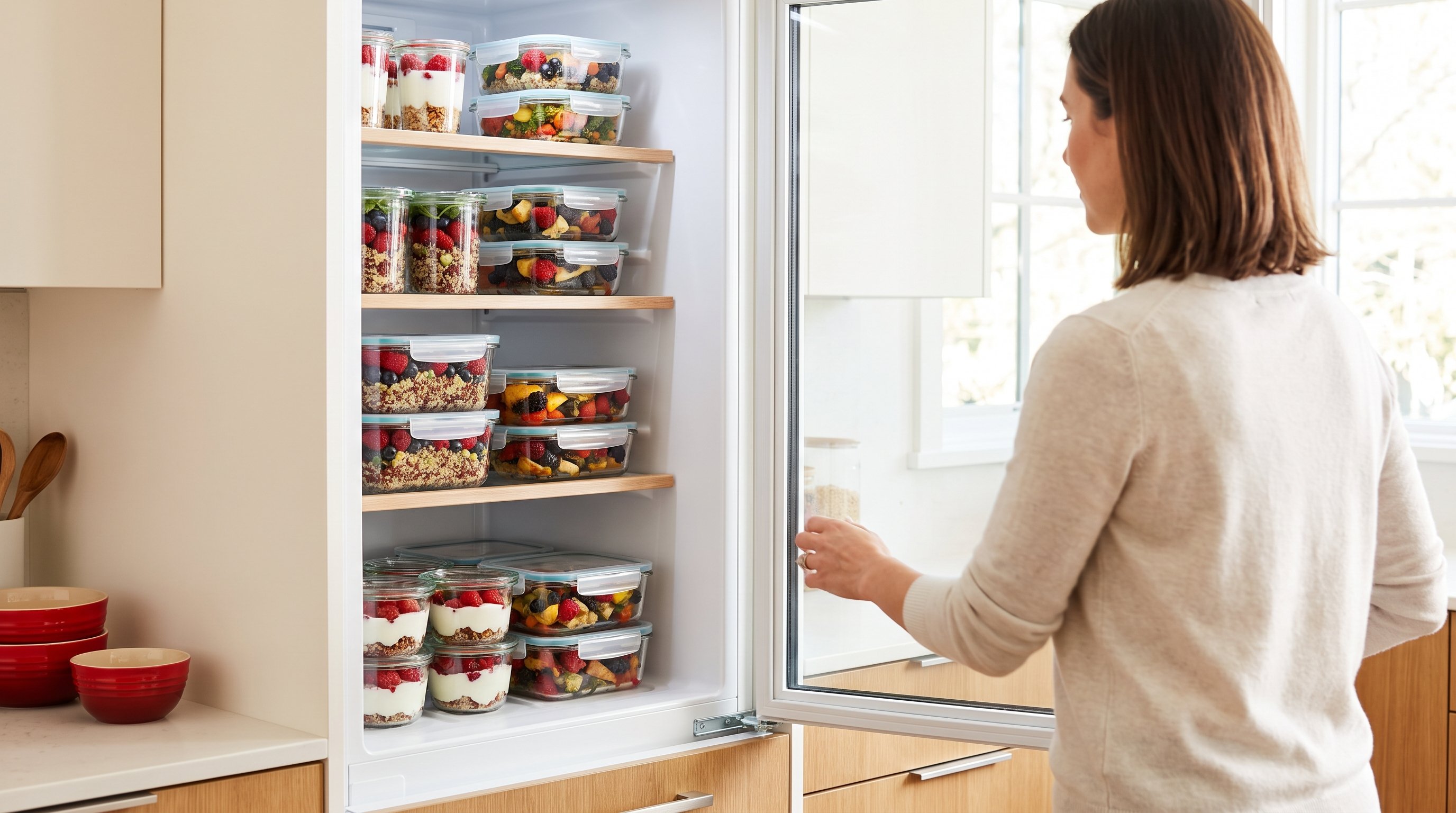
Expect that flat patch rather than being surprised by it. Rotating two or three base recipes, rather than relying on just one, tends to keep things from going stale before the habit has had a real chance to settle in.
Making Weekly Meal Prep Easier With Blood Diet
A big part of why meal prep fails isn't the cooking, it's the planning that happens before the cooking even starts: what to make, how much, and whether it fits what you're trying to achieve.
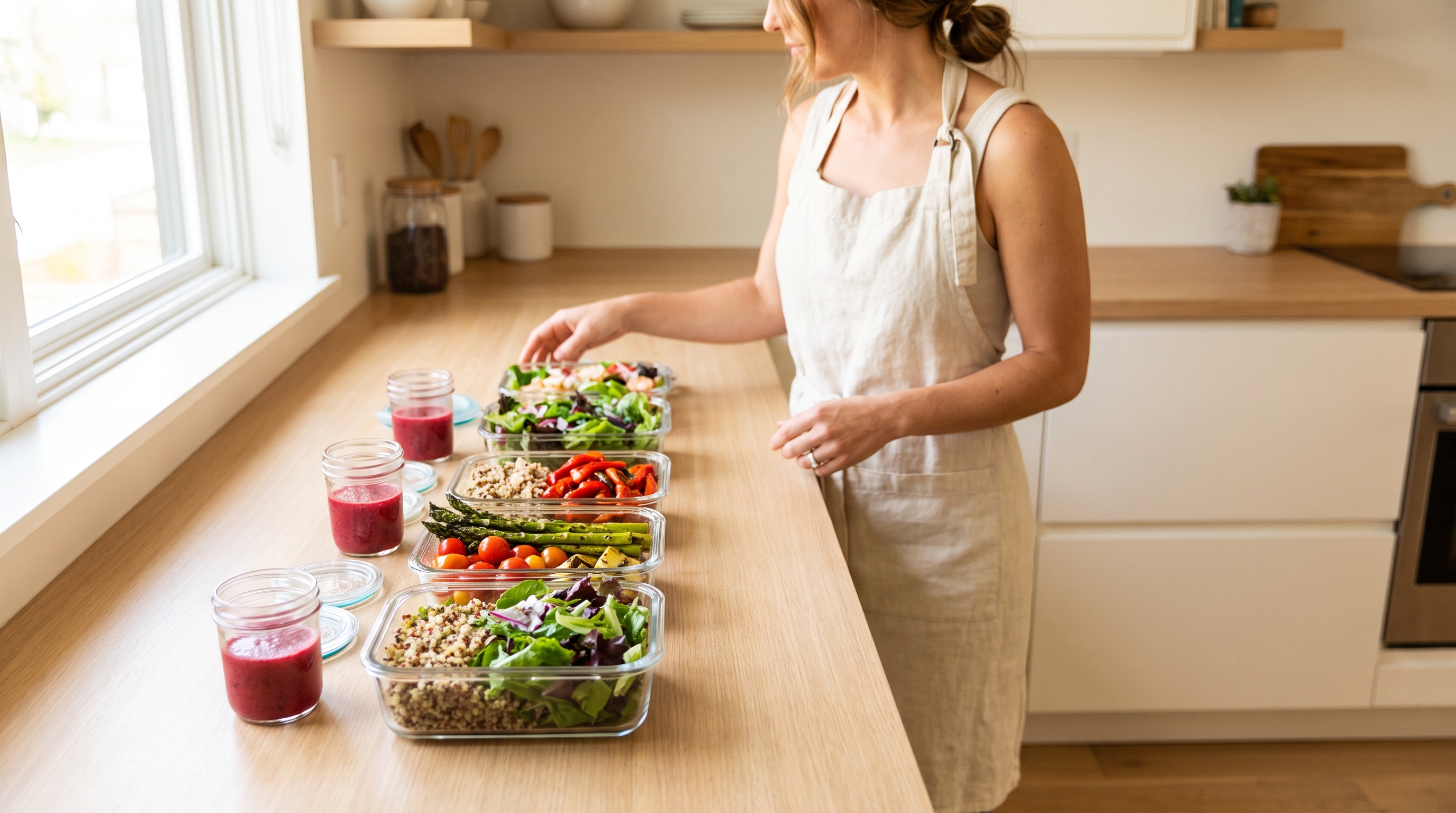
Blood Diet removes that planning step by giving you a meal plan built around food you already like, pulled from over 1000 blood type-based recipes, so prep day starts with a list instead of a blank fridge. Progress trackers for water, weight and steps sit in the same place, so the cooking and the tracking don't live in two different apps you have to remember to open.
Eat Clean Every Day
Natural Weight Loss Plan
Turning One Good Prep Day Into a Habit
The best place to start is small: pick one meal, pick one cooking session, and see how that single change feels after a week before adding anything else.
Blood Diet can sit alongside that first step, giving you the recipes and the tracking so the only thing left to do is the cooking itself.
FAQ
A single batch cooking session of 60 to 90 minutes can usually cover four or five lunches, depending on what's being made. Splitting it into two shorter sessions across the week often feels more manageable than one long one.
Repetition is the main complaint, which is why rotating sauces, spices or two different base recipes helps more than cooking one dish five times. Freezing half a batch and swapping it for a second recipe partway through the week also breaks up the monotony.
Component prepping, cooking just a grain, a protein and a vegetable separately, takes less time than full recipes and still saves the daily decision-making. Fifteen minutes of chopping while dinner cooks can cover most of what's needed for the next day's lunch.
No, prepping is just a method of cooking ahead, it doesn't require any particular diet to work. Blood Diet offers meal plans based on blood group for anyone who wants a starting structure, but the batching approach itself works with any way of eating.
Share this post